
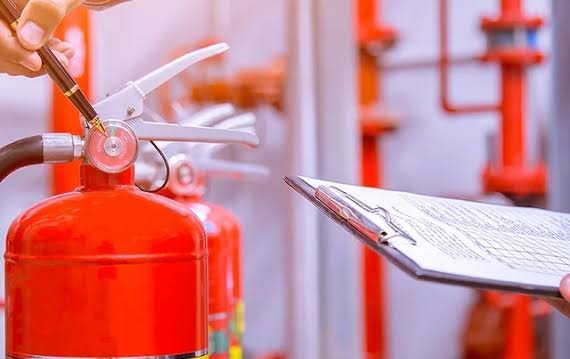
A fire safety audit is more than a basic inspection of fire extinguishers. It is a structured review of how well a building can prevent, detect, communicate, and respond to a fire emergency. Depending on the property, an audit may examine fire alarms, detection devices, emergency exits, evacuation arrangements, extinguishers, suppression systems, electrical risks, emergency lighting, signage, documentation, and maintenance records.
In Pakistan, the Building Code of Pakistan Fire Safety Provisions 2016 is an important reference for fire-safety requirements. The Pakistan Engineering Council lists these provisions among its building-code resources.
Before paying for an audit, it is therefore important to understand exactly what the auditor will inspect and what kind of report you will receive afterward.
Check the Auditor’s Qualifications and Experience
One of the first things to verify is the experience of the person or company conducting the audit. Fire safety involves several technical areas, including fire detection, alarms, suppression, electrical safety, evacuation, and building design.
Ask whether the auditor has relevant technical qualifications and experience with buildings similar to yours. An industrial facility, school, hospital, warehouse, office, and residential building can have very different fire risks.
Experience with your particular type of property is especially useful because the auditor should understand the hazards associated with its activities, equipment, occupancy, and layout.
Pakistan Engineering Council also recognizes fire detection, alarm, and suppression installation, commissioning, and maintenance as a specific engineering specialization.
Ask for a Clear Audit Scope
Before purchasing an audit, request a written explanation of what will be included.
A useful scope may cover:
- Fire alarm and detection systems
- Smoke and heat detectors
- Manual alarm points
- Alarm notification devices
- Fire extinguishers
- Fire suppression systems
- Emergency exits and escape routes
- Emergency lighting
- Fire-safety signs
- Electrical fire hazards
- Evacuation procedures
- Fire doors and other relevant protective features
- Maintenance and inspection records
- Staff awareness and emergency procedures
The exact scope should depend on the building and its risks. A small office does not necessarily require the same audit as a factory or large commercial complex.
Check the Fire Alarm System
The fire alarm system deserves particular attention because early detection can provide people with valuable time to respond and evacuate.
The Building Code of Pakistan Fire Safety Provisions includes requirements concerning detection, alarm, and communication systems. Where fire alarm systems or automatic fire detectors are required, the code references NFPA 70 and NFPA 72 or another approved code or standard.
When reviewing an audit service, ask whether the auditor will assess:
- Detectors
- Manual call points
- Alarm sounders
- Visual notification devices where applicable
- Control panels
- Backup batteries
- System fault indicators
- Alarm communication
- System documentation
- Maintenance history
A professional assessment should look beyond whether an alarm panel simply appears to be powered on.
For properties considering a fire alarm system in Pakistan, the audit can also help identify whether an existing system provides appropriate coverage and whether components require maintenance, testing, replacement, or upgrading.
Look at Maintenance and Testing Records
Fire safety equipment can deteriorate over time. Dust, humidity, physical damage, aging components, poor connections, and lack of maintenance can reduce reliability.
For this reason, an audit should review available maintenance and testing records rather than only inspecting equipment visually.
For example, a fire alarm may appear normal while having an unnoticed fault in a detector, battery, wiring connection, or notification device. Professional inspection and testing can identify issues that are not obvious during an ordinary walk-through.
Fire alarm service providers such as describe inspection, testing, maintenance, and upgrades as important parts of maintaining fire detection systems.
Ask Whether the Audit Includes a Risk Assessment
A good fire safety audit should consider the actual risks inside the building.
For example, an office may have risks associated with electrical equipment and general occupancy, while a warehouse may have large quantities of combustible materials. A commercial kitchen, server room, factory, hospital, or laboratory can have completely different hazards.
The auditor should consider factors such as:
- Building use
- Number of occupants
- Occupancy patterns
- Stored materials
- Electrical equipment
- Machinery
- Cooking or heating equipment
- Flammable or combustible materials
- Building layout
- Emergency exits
- Fire detection coverage
- Existing suppression systems
The purpose is not simply to identify equipment that exists. It is to determine whether the overall fire-safety arrangement matches the building’s risks.
Review Emergency Exits and Evacuation Arrangements
Fire protection is not only about equipment. People also need a safe and organized way to leave a building during an emergency.
The audit should examine whether emergency exits are clearly identified, accessible, and appropriate for the building’s occupancy and layout. Evacuation routes should also be considered alongside emergency lighting and signage where applicable.
The Building Code of Pakistan Fire Safety Provisions contains requirements concerning emergency egress and evacuation drills, including provisions for predetermined relocation locations and maintaining records of drills where required.
A useful audit should identify problems that could make evacuation slower or confusing during an emergency.
Ask for a Detailed Written Report
A fire safety audit should produce more than a verbal statement such as “everything looks fine.”
Before purchasing the service, ask what the final report will contain.
A useful report should clearly identify:
- Areas inspected
- Systems and equipment reviewed
- Problems discovered
- Level of risk where appropriate
- Recommended corrective actions
- Priority of each recommendation
- Supporting photographs or observations where useful
- Testing or inspection information
- Relevant standards or requirements
- Suggested follow-up actions
Clear documentation makes it easier for building owners and managers to understand what needs attention.
It also provides a useful record for future inspections and maintenance planning.
Check Whether the Auditor Provides Practical Recommendations
A report should help you understand what to do next.
For example, instead of simply saying that an alarm detector needs attention, the report should explain the issue and identify the appropriate corrective action.
Recommendations should be practical and related to the identified risk. They should distinguish between urgent safety concerns, routine maintenance matters, and longer-term improvements.
This is particularly important for large facilities where there may be many findings.
Be Careful With Extremely Low-Cost Audits
Price is naturally an important consideration, but the cheapest audit is not necessarily the best value.
An unusually low price may indicate a very limited inspection, especially if the service includes little time on-site or provides only a short checklist.
Before comparing prices, compare the scope of work.
Ask:
- How long will the inspection take?
- How many areas will be examined?
- Will equipment be tested?
- Will documentation be reviewed?
- Will photographs be included?
- Will risks be prioritized?
- Will a detailed report be provided?
- Will follow-up recommendations be explained?
A slightly more comprehensive audit can provide significantly more useful information than a quick visual inspection.
Check Whether Testing Is Included
Inspection and testing are related but are not always the same thing.
An inspection may involve examining the condition and installation of equipment. Testing involves checking whether systems actually respond as intended, where such testing is appropriate and safe.
For example, a fire alarm assessment may involve checking detectors, notification devices, control-panel functions, and related components.
Similarly, suppression systems may require specialized testing. Flame Defender describes professional suppression testing as including inspections of detection devices, control panels, cylinders, piping, valves, alarms, and related components.
Ask the provider exactly which tests are included before purchasing the audit.
Check Documentation and Compliance Support
Documentation is an important part of fire safety management.
Keep records of:
- Previous audits
- Equipment inspections
- Fire alarm testing
- Suppression-system testing
- Extinguisher servicing
- Repairs
- Maintenance
- Fire drills
- Staff training
- Corrective actions
The Building Code of Pakistan Fire Safety Provisions includes provisions concerning maintenance, inspection, and testing of required fire-safety equipment and systems.
An audit should help identify missing or outdated records and explain what documentation should be maintained.
Consider the Building’s Fire Alarm Needs
Technology should be selected according to the building rather than simply choosing the most advanced-looking system.
Fire alarm systems can include conventional, addressable, wireless, intelligent, smoke-detection, heat-detection, and emergency notification solutions. The appropriate arrangement depends on factors such as building size, layout, occupancy, risks, and applicable requirements.
A professional audit can be useful when deciding whether an existing system remains suitable or requires improvement.
For example, if a building has changed significantly since its original fire alarm installation, its current detection coverage may need to be reviewed.
Check the Auditor’s Approach to Existing Systems
If your property already has fire-safety equipment, ask whether the auditor will evaluate the existing system before recommending replacement.
A responsible audit should identify actual deficiencies rather than automatically recommending that everything be replaced.
In some cases, equipment may only need maintenance, adjustment, repair, or a targeted upgrade. In other situations, an older system may no longer be suitable for the building.
An evidence-based assessment helps building owners make better decisions.
Ask About Follow-Up Support
Finding a problem is only the first step.
Before buying an audit, ask whether the company provides follow-up support after the report. This could include explaining findings, reviewing corrective actions, conducting re-inspections, or helping verify that identified issues have been addressed.
Follow-up can be particularly useful for larger properties with multiple departments and safety systems.
It also helps turn the audit from a one-time document into part of an ongoing fire-safety management process.
Consider the Type of Property
The audit should be appropriate for the property being inspected.
Residential Buildings
Residential properties may need attention to smoke detection, escape routes, electrical risks, extinguishers where appropriate, and occupant awareness.
Offices
Offices should consider fire alarms, emergency exits, electrical equipment, emergency lighting, evacuation procedures, and staff awareness.
Warehouses
Warehouses may require particular attention to storage arrangements, combustible materials, access routes, detection coverage, suppression systems, and emergency response arrangements.
Factories
Industrial facilities can contain machinery, electrical equipment, production processes, and specialized hazards. Their audits may therefore need a broader technical assessment.
Schools and Educational Facilities
Schools need to consider the safety of students and staff, evacuation arrangements, alarm notification, emergency exits, fire equipment, and regular drills.
Do Not Ignore Staff Awareness
Even the best equipment cannot replace proper emergency awareness.
Employees and other occupants should understand what the alarm means, how to follow the building’s evacuation procedure, and where to go during an emergency.
A fire safety audit can identify weaknesses in training or emergency planning. It can also encourage organizations to review whether staff receive appropriate information and whether evacuation drills are conducted when required.
The objective is to create a coordinated response rather than relying entirely on individual decisions during an emergency.
Understand What a Fire Safety Audit Does Not Replace
A fire safety audit should not be treated as a substitute for regular maintenance.
A building may receive a satisfactory audit and still require ongoing inspections, testing, servicing, training, and corrective action.
Fire safety is a continuous process. Equipment changes, buildings are renovated, occupancy can increase, storage arrangements can change, and new hazards can appear.
For this reason, audits should be part of a wider safety-management program.
Choose Quality Over a Checklist
A checklist is useful, but a high-quality audit requires professional judgment.
Two buildings may have the same number of fire extinguishers and alarms but completely different levels of risk. The quality of an audit therefore depends on whether the auditor understands the building and can connect individual observations to the overall fire-safety strategy.
Before purchasing, look for a provider that combines technical knowledge, relevant experience, proper documentation, and a clear inspection methodology.
Final Thoughts
Choosing a fire safety audit should be based on more than price. Before purchasing, check the auditor’s qualifications, experience, inspection scope, testing procedures, reporting standards, documentation, and understanding of your property’s specific risks.
Pay particular attention to fire detection and alarm systems, emergency exits, fire equipment, suppression systems, maintenance records, and evacuation arrangements. The Building Code of Pakistan Fire Safety Provisions provides an important reference point for fire-safety requirements in Pakistan.
A properly conducted audit can reveal weaknesses before they become serious problems. It can also help property owners create a more organized approach to fire prevention, detection, evacuation, maintenance, and emergency preparedness.
Whether a building is residential, commercial, educational, industrial, or institutional, regular professional assessment can contribute to a stronger overall safety strategy. A reliable fire alarm system in Pakistan is one important part of that strategy, but effective fire protection ultimately depends on the complete system working together.
FAQs
1. What is a fire safety audit?
A fire safety audit is a systematic review of a building’s fire risks, equipment, detection systems, evacuation arrangements, emergency procedures, and related safety measures. It helps identify deficiencies and recommend corrective actions.
2. Why should I check the auditor’s qualifications?
Fire safety involves technical systems and building-safety requirements. An experienced and appropriately qualified auditor is better positioned to identify problems accurately and provide useful recommendations for the type of property being assessed.
3. Does a fire safety audit include fire alarm systems?
It can, depending on the agreed scope. A comprehensive audit may review detectors, control panels, alarm devices, manual call points, backup power, documentation, maintenance, and other relevant parts of the system.
4. How often should a fire safety audit be conducted?
The appropriate frequency depends on the type of building, its hazards, applicable requirements, changes to the property, and the organization’s safety-management program. Regular audits should be considered alongside routine equipment inspection, testing, and maintenance.
5. What should I receive after a fire safety audit?
You should generally expect a written report describing the areas inspected, findings, identified risks, and recommended corrective actions. Depending on the service, the report may also include photographs, testing information, documentation reviews, and priorities for addressing deficiencies.